Preliminary report: analysis of the waste companies’ comments on the handling of roll-ups
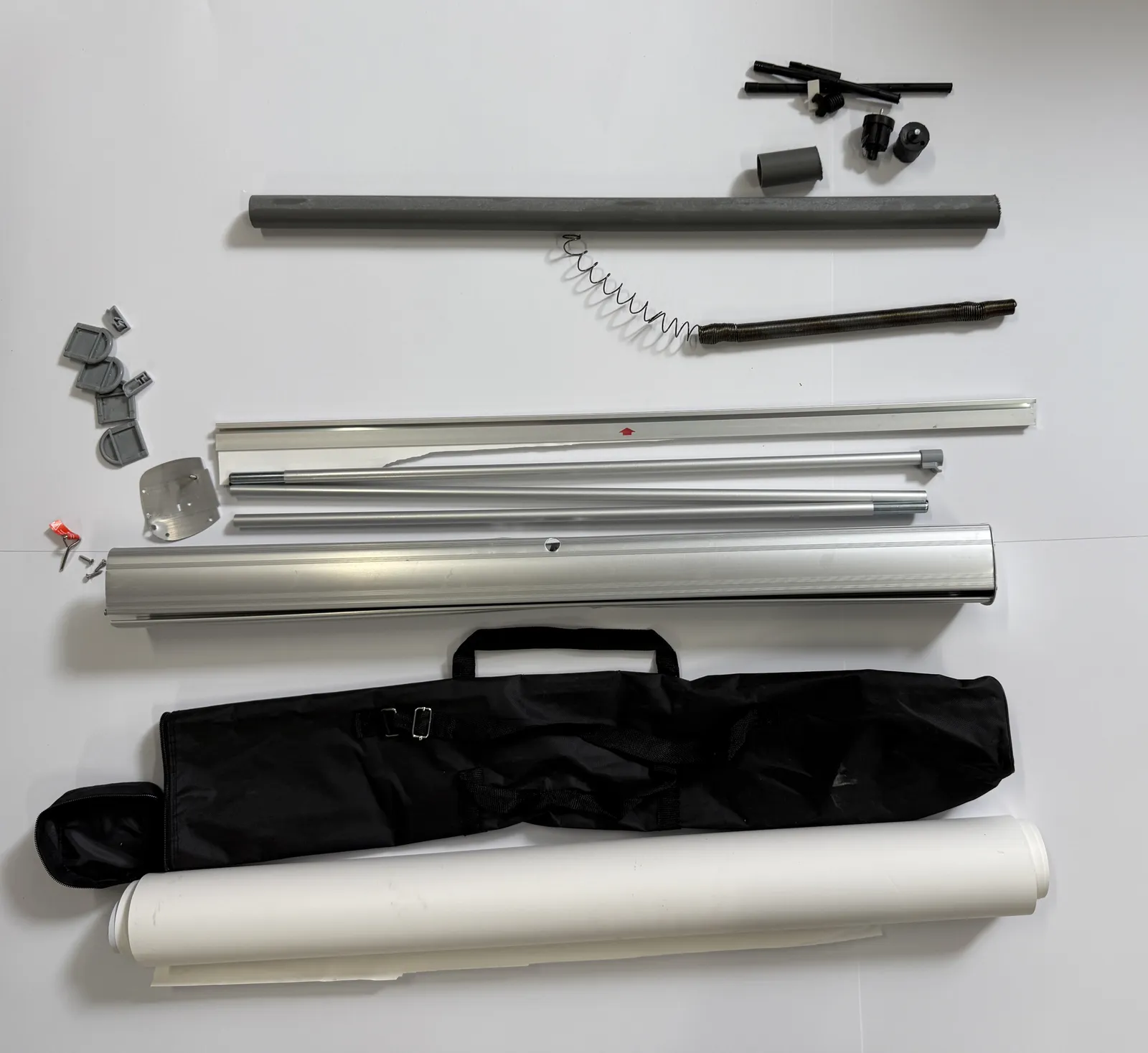
GreenForm® contacted 56 waste companies to examine how roll-ups and similar products are handled. This preliminary report is based on 23 responses and aims to map processes, challenges and potential problem areas, especially with regard to sustainability and material composition.
Detailed analysis
1. Roll-ups are treated as metal waste
- Many waste companies handle roll-ups as metal waste. Aluminium is typically separated from other materials using technologies such as eddy current separators and is recycled effectively.
- Note: There is a high recycling rate for metal components, but this only applies to the part of the product that is pure metal.
2. Non-metallic materials typically go to residual waste
- The other components, such as the banner (typically plastic or PVC) and other non-metallic materials, most often end up in residual waste, which is normally incinerated.
- Incineration and PVC: Residual waste usually means incineration, which can be problematic if the material contains PVC. PVC forms hazardous by-products such as dioxins when incinerated, which requires advanced cleaning systems and increases the environmental burden.
3. Different practices among waste companies
- While some companies dispose of the whole product as residual waste, others try to separate the materials manually or mechanically to maximise recycling. However, several state that the plastic and banner components usually cannot be recycled.
- Example: One company mentions that the metal parts are recycled, but that the banner and other materials end up in residual waste.
4. Landfill as a last resort
- At least one respondent states that materials from roll-ups end up in landfill. This is a worrying solution, as it does not make use of the resources and can lead to a long-term environmental burden.
5. Interest in sustainable alternatives
- Several companies have expressed interest in GreenForm® Fold-Up® and other products made of cardboard, which they consider easier to recycle. Cardboard can be recycled directly and does not require the same complicated treatment as mixed-material products.
The problems with PVC in residual waste
PVC in residual waste is particularly problematic because of:
- Environmental burden: When incinerated, PVC releases chlorinated compounds that can lead to the formation of dioxins. These substances are extremely toxic and require extensive filtering processes to minimise health and environmental impacts.
- Reduced recyclability: PVC can be difficult to recycle and often contaminates other plastic fractions.
- Increased costs: Waste companies may incur extra costs for treating waste containing PVC.
Preliminary conclusion
Roll-ups in their current form
- Roll-ups are often made of materials that combine metal, plastic and PVC, which makes them difficult to recycle completely. While metal parts are recycled effectively, the banner (often plastic/PVC) goes to residual waste or incineration.
- The problem with PVC is particularly serious, as it can lead to a considerable environmental burden when incinerated and in practice limits recycling.
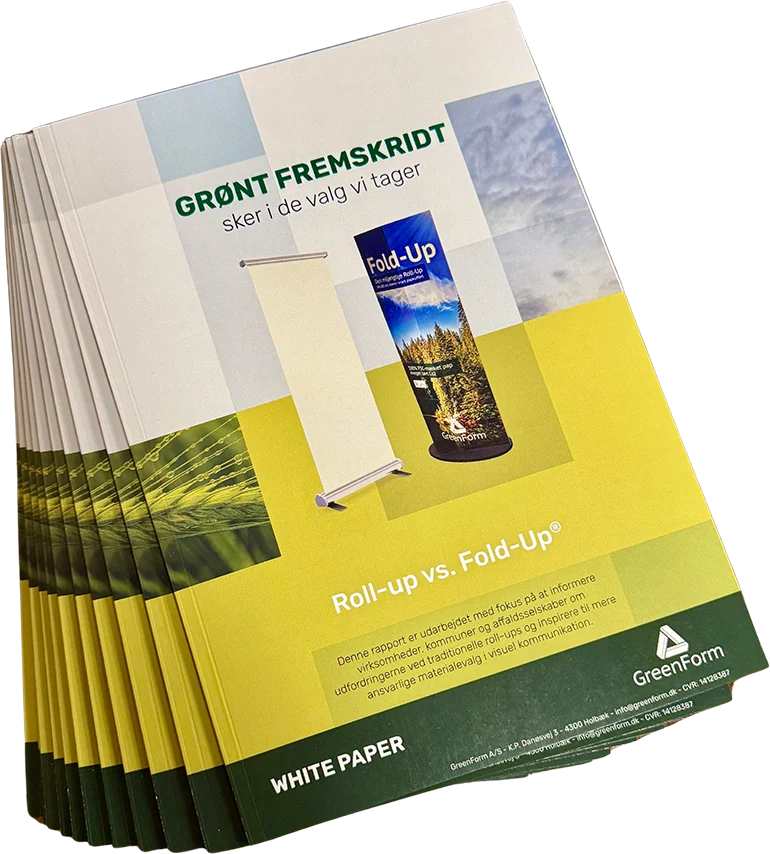
GreenForm® Fold-Up® as an alternative
The waste companies are already showing interest in such alternatives, which underlines the need to promote more responsible products in the market.
Cardboard-based products offer a solution that can be recycled directly as cardboard without the problems associated with PVC. This can reduce the amount of waste and the environmental burden considerably.